

8 Signs Your Sprinkler System Needs a Professional Wet Check (Before Small Problems Get Expensive)
If your lawn has developed dry patches in the same spots every season, your water bill crept up without explanation, or one of your zones occasionally refuses to cooperate, your irrigation system is likely working against you — quietly, and often invisibly. These are not coincidences. They are early symptoms of specific, diagnosable failures that a professional irrigation wet check identifies before they turn into dead turf, flooded planting beds, or five-figure repair bills. Here are the eight most reliable warning signs that your system needs a licensed technician’s attention.
What Is an Irrigation Wet Check, and Why Does It Matter?
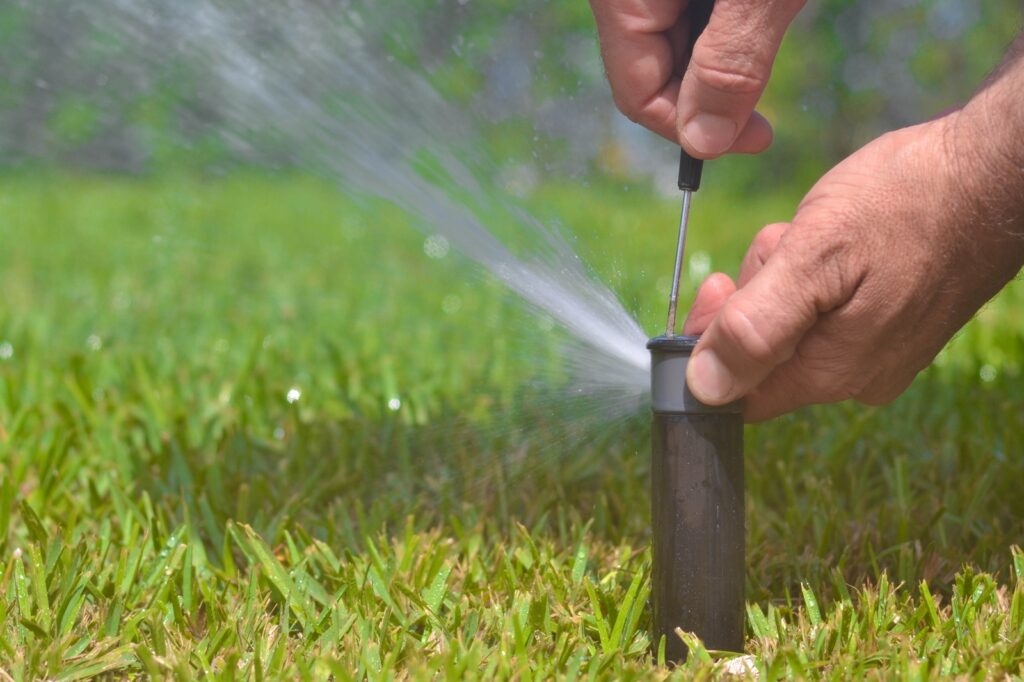
A professional seasonal wet check is not a visual walkthrough with the system sitting idle. A licensed irrigator activates every zone individually, walks the full extent of each zone while it operates, and evaluates the real-world performance of every head, valve, connection, and controller setting against what the system is designed to deliver. Unlike a visual spot-check, a wet check catches failures that are invisible until the system is pressurized and running: a rotor that has stopped turning, an emitter that delivers half its rated flow, a valve that seeps water continuously between cycles, a rain sensor that stopped communicating with the controller.
For homeowners and commercial property managers across Martin County, Palm Beach County, and St. Lucie County, irrigation maintenance is also a regulatory matter. The South Florida Water Management District (SFWMD) enforces year-round water conservation rules that require all automatic irrigation systems to have functioning rain sensors. A wet check confirms your system is operating in full compliance with those rules — protecting you from utility notices and fines that can follow non-compliant irrigation activity.
According to the University of Florida IFAS Extension, a single leaking zone valve can waste thousands of gallons of water per week before it becomes visually apparent — and most homeowners never notice until the utility bill arrives.
Sign 1: Dry or Dead Patches That Don’t Recover After Rain
When specific areas of the lawn stay brown or thinned out even after Florida’s wet season has brought consistent rainfall, the cause is almost always an irrigation coverage failure rather than a soil or pest problem. The most common culprits are heads that have settled below grade and no longer achieve full pop-up height, nozzles that have clogged and are delivering a distorted or drastically reduced spray pattern, and rotors that have stopped turning and are delivering a fixed stream to one point rather than sweeping across the zone.
The critical insight is that these dry patches tend to appear in the same locations season after season because the coverage failure is structural, not weather-dependent. If your lawn has persistent problem spots that fertilizer and extra hand watering don’t resolve, the failure is in the irrigation delivery, not the landscape itself. A wet check identifies the specific head or heads responsible and corrects the coverage gap directly.
Sign 2: An Unexplained Spike in Your Monthly Water Bill
A sudden increase in monthly water consumption that cannot be explained by a change in irrigation scheduling is one of the strongest indicators that something is leaking or stuck open in your irrigation system. A zone valve diaphragm that has torn and is no longer sealing properly allows water to flow through the zone continuously between scheduled irrigation cycles. A mainline break or lateral line crack caused by root intrusion or soil movement discharges water underground with no surface evidence for days or weeks. According to the University of Florida IFAS residential irrigation research program, irrigation systems are responsible for the majority of residential water use in South Florida, and system leaks are a leading cause of consumption that exceeds what the landscape actually requires.
If your utility bill has climbed by more than 10 to 15 percent without a change in watering schedule or household use, have the system evaluated before the cause of the loss makes itself known through a soggy section of lawn or a flooded planting bed.
Sign 3: A Zone That Runs but Won’t Shut Off
A zone that continues running past its scheduled end time, or that runs continuously regardless of the controller’s programmed schedule, almost always indicates one of three conditions: debris lodged in the valve diaphragm seat that prevents the rubber seal from fully closing, a valve diaphragm that has torn and can no longer create a watertight seal, or a solenoid that has failed in the energized (open) position. None of these is a minor inconvenience. A zone stuck in the open position during South Florida’s wet season can deposit thousands of gallons of water onto an already-saturated area in a matter of days, promoting turf fungal disease, eroding planting bed edges, and contributing to the surface pooling and drainage problems that are already common in flat Martin County terrain.
A wet check catches a valve that is transitioning toward full failure before it crosses that line, while the repair is still a diaphragm kit replacement rather than a flooded zone emergency.
Sign 4: Heads That Don’t Pop Up Fully (or at All)
A head that fails to extend to its full pop-up height produces a spray pattern that covers only a fraction of its designed radius, leaving the outer portions of the zone dry. The three most common causes are physical damage from mowing or vehicle contact that has bent or cracked the riser; debris accumulation inside the head body from South Florida’s sandy soils packing around the mechanism; and insufficient zone pressure caused by a leak elsewhere in the lateral line dropping the available pressure before it reaches the head.
On properties across the Martin County and Palm Beach County area, where lawn care equipment regularly passes within inches of sprinkler heads and where fine sandy soil works its way into any available opening, partially functional heads are one of the most common findings during routine wet checks. The repair is typically straightforward when caught early and significantly more complicated if a partially functioning head has been allowing the surrounding turf to slowly decline for an entire growing season.
Sign 5: The System Runs During or Right After Rain
Florida law (specifically Florida Statute 373.62) requires all automatic irrigation systems to be equipped with a functioning rain sensor or soil moisture sensor that suspends irrigation when sufficient rainfall has occurred. The SFWMD’s year-round water conservation rule reinforces this requirement across all of South Florida, including all communities in Martin County, Palm Beach County, and St. Lucie County. If you observe your irrigation system activating during a rain event or within a few hours of one, your rain sensor is either not functioning, has been physically bypassed, or has been set to a threshold so high that normal rainfall does not trigger a shutoff.
Beyond the water waste, this is a compliance issue. Utilities in the SFWMD service area actively monitor for irrigation running outside permitted conditions, and a property observed watering during rain events is among the easiest compliance violations to document. A wet check tests the rain sensor’s actual response and corrects the problem before it generates a utility notice.
Sign 6: Soggy or Persistently Wet Areas Between Irrigation Cycles
A section of lawn or a planting bed that stays wet or soft to the touch between scheduled irrigation events is almost always being supplied with water it was not programmed to receive. The typical cause is a zone valve that seeps continuously through a worn diaphragm or debris-fouled seat, delivering low-level flow to the zone at all times rather than only during scheduled cycles. On a property already managing South Florida’s high water table and wet-season rainfall, continuous low-level seepage from a valve adds a chronic moisture load that promotes turf fungal diseases — particularly large patch in St. Augustinegrass — and drives surface drainage problems by keeping soil pore spaces perpetually saturated.
If you have chronically wet areas that don’t respond to reducing the irrigation schedule, the wet check is likely to identify a valve fault as the source of the moisture rather than a drainage or soil issue.
Sign 7: Uneven Spray Patterns, Misting, or Wind Drift
Spray heads and rotors that are delivering water in misting clouds rather than clean arcing streams, or whose spray patterns are visibly distorted or asymmetrical, are operating outside their designed performance range. Misting from spray heads most commonly indicates that the zone pressure is too high for the installed nozzle, a condition that wastes significant water through evaporation and wind drift before it ever reaches the ground. Research by the Irrigation Association notes that misting-related water waste can represent 30 to 50 percent of total zone output in some high-pressure situations.
Distorted patterns indicate damaged or partially blocked nozzle inserts. Asymmetrical arcs on rotors indicate a worn drive mechanism or debris in the rotor body. All of these reduce the effective coverage of the zone while consuming the full programmed flow volume, meaning the system is using the water budget for the zone without delivering the coverage the zone requires.
Sign 8: Your Controller’s Programming Has Changed on Its Own
If your irrigation controller is running on days or at times that you did not program, or if zones that should run for 10 minutes are now running for 30, your controller has either lost its memory due to a power interruption and reverted to factory defaults, or a component in the controller is failing. Power outages and surges are common in Martin County and throughout South Florida during the wet season, and a controller without a properly functioning backup battery or a recent programming verification may be running on whatever factory default schedule was programmed at the manufacturer years ago.
Controller resets are one of the most common causes of SFWMD watering restriction violations, because a factory-default schedule almost certainly does not match the specific odd- or even-address day assignments that apply to your property. A wet check includes a full controller audit and programming update, ensuring your system is running on the correct schedule with the correct day assignments and the appropriate seasonal run times for current South Florida conditions. The SFWMD publishes guidance on irrigation scheduling adjustments for each season, and a well-programmed controller is the foundation of a compliant, efficient irrigation system.
How Often Should South Florida Homeowners Schedule a Wet Check?
The professional standard for irrigation maintenance in South Florida’s climate — where systems run year-round and never receive the seasonal rest that moderates wear in cooler climates — is more frequent inspection than most homeowners realize. At minimum, a professional wet check is recommended before the start of the dry season in October to November, when the system will be carrying the full irrigation burden without rain support, and again before peak wet season in May to June, when the controller schedule should be reduced significantly to avoid overwatering through Florida’s rainy months.
For HOA communities, commercial properties, and any residential property where landscape quality is a high priority, monthly or quarterly wet check service plans provide continuous oversight that catches developing problems before they cause visible turf damage or spike the water bill. Auto Sprinkler Inc. offers monthly, bi-monthly, and quarterly service plans for residential and commercial accounts throughout the service area.
Irrigation in Martin County and the Treasure Coast: Local Factors That Accelerate Wear
The conditions that affect irrigation systems in Palm City, Stuart, Jensen Beach, Hobe Sound, and the surrounding Martin County communities are more demanding than those in many other parts of the country. Florida’s intense UV radiation degrades plastic nozzle inserts and head bodies faster than in northern climates. The year-round growing season means there are no off-season months when system components can rest. Sandy soils work into head mechanisms and emitter bodies, causing the gradual fouling that leads to reduced performance. Proximity to the coast on Hutchinson Island, Jensen Beach, and along the St. Lucie River Inlet means salt air accelerates corrosion of metal valve components and outdoor electrical connections. And the flat terrain of the Martin County area means that irrigation failures contribute directly to drainage problems when zones seep or run incorrectly into already-saturated ground.
A wet check performed by a technician who knows these local conditions will evaluate the system with all of these factors in mind, identifying wear patterns and component vulnerabilities specific to the region rather than applying a generic national inspection protocol to a distinctly South Florida irrigation environment.
When to Call Auto Sprinkler Inc.
If you recognize any of these eight signs in your irrigation system, scheduling a professional wet check with Auto Sprinkler Inc. is the most direct path to diagnosing and correcting the problem before it escalates. As Martin County Licensed Irrigator #MC2500034, our team performs all work in-house with no subcontractors, evaluates every zone under actual operating conditions, updates controller programming to current SFWMD restriction schedules, and completes minor repairs during the same service visit. We serve residential homeowners, commercial property owners, and HOA communities throughout Palm City, Stuart, Jensen Beach, Hobe Sound, Port Salerno, and all communities across Martin County, Palm Beach County, and St. Lucie County.
Ready to find out what your irrigation system is doing when you aren’t watching? Call Auto Sprinkler Inc. at 772-212-1200 or schedule online at autosprinkler.com. Licensed, insured, and serving Martin County and the Treasure Coast with no shortcuts and no subcontractors.